Buying Advice
How to check if a used car listing is a good buy (UK)
Assess a listing’s history, condition and total cost. Choose the evidence you need and know when to continue, resolve concerns or leave.
Practical used-car advice and market intelligence from the UseRalph team.
Assess a listing’s history, condition and total cost. Choose the evidence you need and know when to continue, resolve concerns or leave.
Understand Cat S and Cat N, distinguish current damage from earlier salvage history, and keep valuation, repair costs and target saving separate before bidding.
Use the UK IAA fee schedule to check buyer fees, admin charges and VAT, then add collection and repairs before setting your auction ceiling.
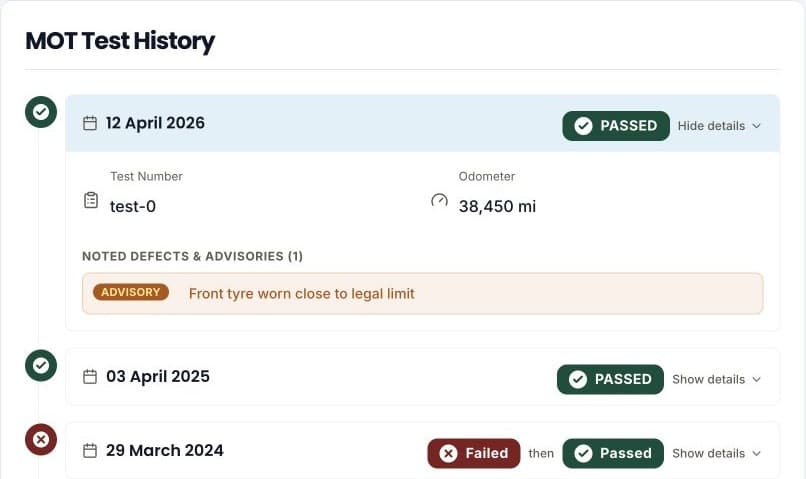
Read repeated MOT advisories, failures and retests in context. Turn the findings into inspection priorities and a repair allowance before an auction bid.
Understand what free MOT history reveals, which questions need paid vehicle records, and what remains to calculate before bidding on an auction car.
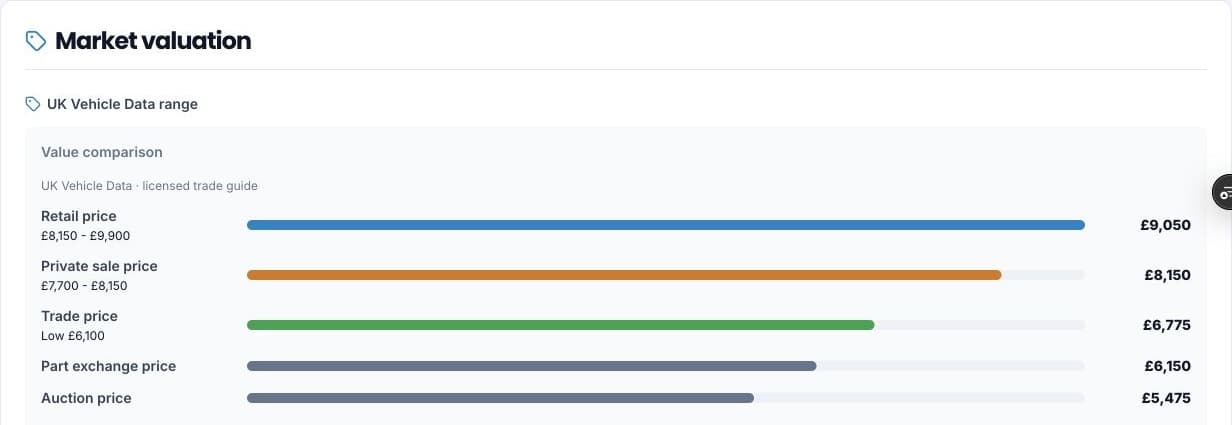
See how repaired market value, repair costs, auction fees, transport and target saving combine to set an auction bid ceiling.
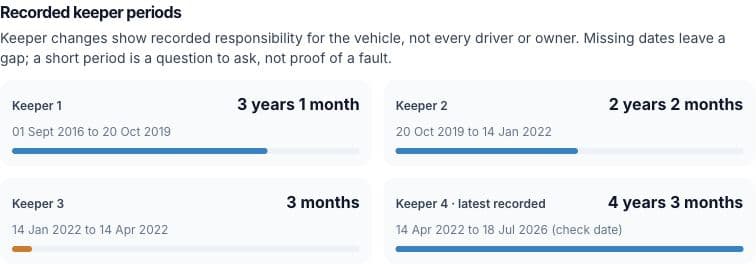
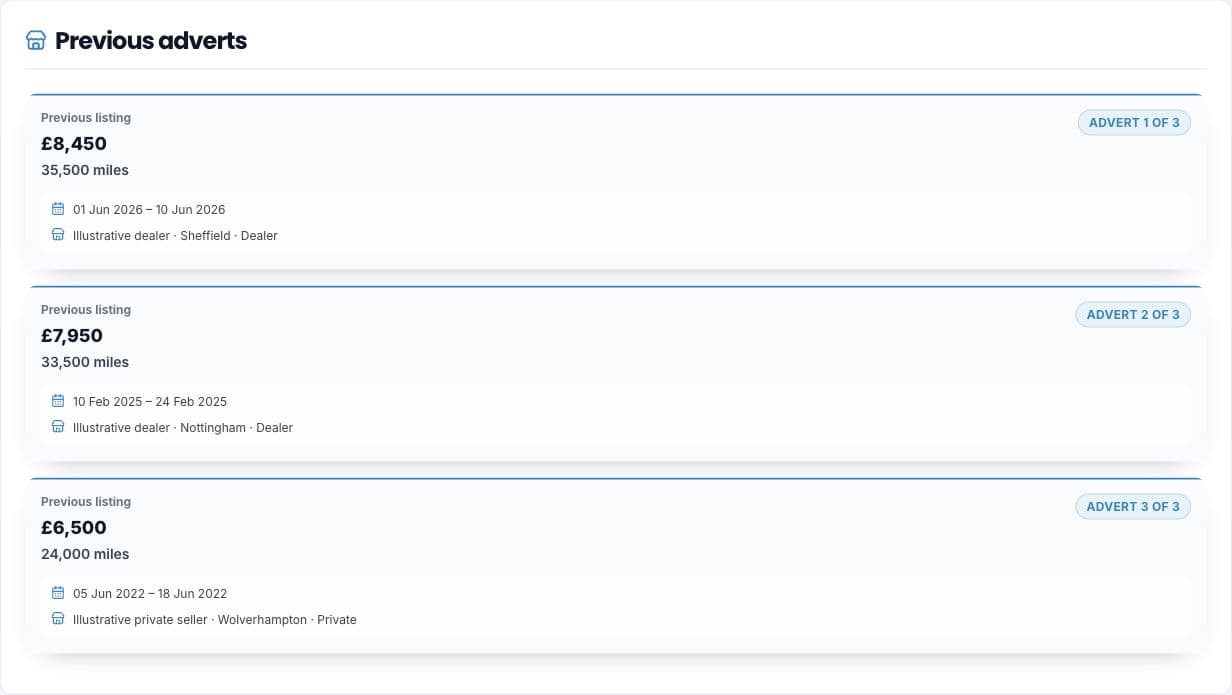
Read previous adverts, keeper periods, MOT mileage and salvage history together before an auction bid, using an illustrative Ralph report.
Set your Copart bid limit from repaired value, repairs, fees and transport, with a worked example and clear reasons to walk away.
Check a used car's identity, MOT, mileage, history and total cost before buying privately, from a dealer or at auction. Know what online records cannot tell you.
How to buy a car at auction in the UK: what you actually pay after the hammer drops, the risks of bidding blind, and the checks to run before the lot ends.
After an online check, match the car’s identity, inspect its condition and know which unresolved concerns are reasons to walk away.